You've probably noticed it. Whether you're browsing listings online, talking to friends who just bought a home, or watching the news — home prices seem stubbornly, almost impossibly high. After years of rising rates, economic uncertainty, and cooling buyer demand, shouldn't prices have come down by now?
The short answer: it's complicated. The longer answer is actually something every buyer and seller should understand — because the forces keeping prices elevated aren't going away overnight.
The Big Picture: Where Prices Stand Today
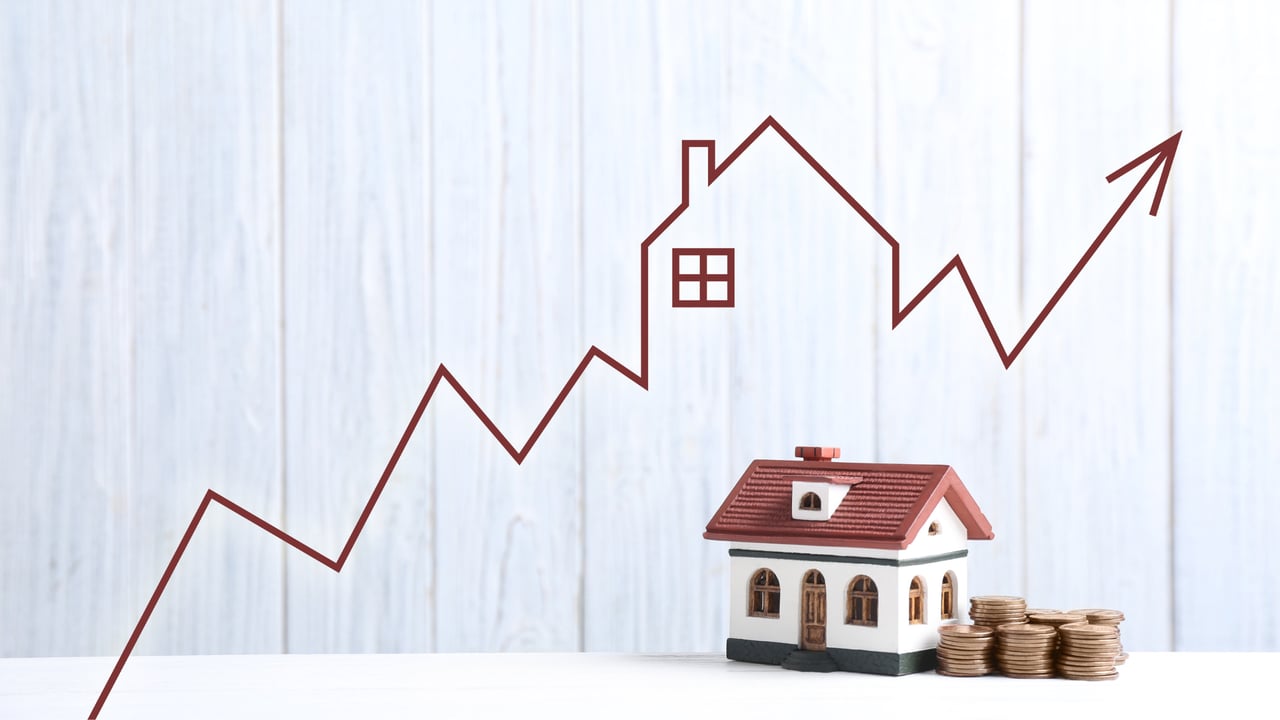
Home prices have risen dramatically over the past five years. According to data presented at a recent National Association of Realtors (NAR) summit, prices have jumped 27% to 80% depending on the market since 2020. The median U.S. home value is currently hovering between $360,000 and $400,000 — a level that was unimaginable for most of the past decade.
And despite rising mortgage rates, a slowdown in sales volume, and widespread talk of a market correction, prices have largely refused to fall. Here's why.
Reason #1: There Simply Aren't Enough Homes
If there's one root cause underlying the high-price environment, it's this: the U.S. does not have enough homes.
For over a decade following the 2008 financial crisis, homebuilders dramatically scaled back construction. The industry was gun-shy after the crash, and new housing starts never fully recovered to meet the needs of a growing population. The result was a structural deficit that compounded year after year.
Today, estimates of the U.S. housing shortage range from 2.8 million to 4.7 million homes, depending on the source:
- Chase estimates the current shortage at approximately 2.8 million units and believes it could take around 10 years to resolve — and notes that figure is likely conservative because it doesn't account for households that haven't formed yet due to discouraged buyers.
- NAR puts the shortage closer to 4.7 million homes, factoring in years of underbuilding compounded by zoning restrictions, land constraints, labor shortages, and regulatory hurdles.
When demand consistently outpaces supply, prices go up. That's not a housing market phenomenon — it's basic economics. And until the supply deficit is meaningfully addressed, it will continue to put a floor under home prices.
Reason #2: The "Lock-In Effect" — Homeowners Aren't Selling
This is arguably the most underappreciated force in today's market — and it's a direct consequence of the pandemic-era mortgage rate environment.
From 2020 to early 2022, mortgage rates hit historic lows — some buyers locked in 30-year fixed rates at 2.5% to 3.25%. Today, those same mortgage products are priced at 6.5% and above. For homeowners who bought or refinanced at rock-bottom rates, selling their home means giving up one of the most valuable financial positions imaginable — and taking on a dramatically more expensive monthly payment on their next purchase.
The numbers make this crystal clear:
As of late 2025, just over 50% of outstanding mortgages still carry rates at or below 4%, meaning millions of homeowners are financially disincentivized from moving. The typical homeowner would face nearly a $1,000 increase in monthly payments if they sold and purchased another home at current prices and rates. — HousingWire
Think about that. A homeowner with a $350,000 mortgage at 3% pays roughly $1,476/month in principal and interest. That same loan balance at 6.5% costs around $2,213/month — an increase of over $700 per month, every month, forever. Many homeowners simply won't make that trade.
The result? Existing inventory remains at historically low levels. Fewer homes for sale means buyers compete harder for the ones that are available — which keeps prices high.
Reason #3: Demand Hasn't Gone Away
You might assume that with prices this high and rates near 7%, buyers would simply step back and wait. Some have. But demand for housing remains fundamentally strong — driven by demographics and the simple fact that people need places to live.
Millennials — the largest generation in U.S. history — are in peak home-buying years. The wave of buyers aged 28–43 represents millions of households that want to own a home but have faced years of affordability challenges. That pent-up demand doesn't disappear; it accumulates.
According to Lawrence Yun, Chief Economist at NAR:
"There is sizable pent-up demand that could be released into the market."
Supporting that view: as of October 2025, 25% of homes were still selling above their list price, and the number of buyers applying for a home mortgage was up 31% year-over-year around the same time. Even in a challenging market, buyers are present. When they compete for limited supply, prices stay elevated.
Reason #4: The True Cost of Waiting — Mortgage Rates
Many would-be buyers have been holding out, hoping rates will fall significantly before they jump in. But that strategy has proven costly for those who've waited.
Here's the reality of today's rate environment:
- The 30-year fixed mortgage rate has hovered in the 6.5% to 7% range for much of the past two years
- Rates briefly dipped toward 5.98% in late February 2026 — offering a glimpse of relief — before rising back to 6.53% by late May 2026 (Freddie Mac)
- Most economists expect rates to remain above 6% through 2026, with only gradual easing in the years ahead
When rates are this elevated, every fraction of a percent matters. On a $400,000 mortgage:
- At 6.0%: ~$2,398/month
- At 6.5%: ~$2,528/month
- At 7.0%: ~$2,661/month
The difference between a 6% and 7% rate on that loan is over $260 per month — more than $3,100 per year.
This is why affordability has deteriorated so significantly. It's not just home prices — it's the combination of high prices and high rates hitting buyers simultaneously.
Reason #5: Decades of Underbuilding Can't Be Fixed Quickly
New construction is ramping up, but the math is sobering. Even with a projected 13.8% increase in new-home starts, adding roughly 1.1 million new units to the market addresses only a fraction of a multi-million-unit deficit that took over a decade to create.
On top of the volume challenge, builders face real obstacles:
- Zoning restrictions that limit density and building types in desirable areas
- Rising construction costs for materials and skilled labor
- Lengthy permitting processes that can add months or years to a project
- Land scarcity in established markets where demand is highest
The result: new supply is growing, but not fast enough to rapidly shift the balance between supply and demand — at least not on a national level.
What This Means If You're a Buyer
If you're waiting for prices to crash before you buy, most economists agree: a dramatic nationwide price decline is unlikely.
As NAR Chief Economist Lawrence Yun stated plainly: "Home prices nationwide are in no danger of declining." Zillow forecasts just 1.2% national price growth in 2026, while NAR projects around 4%. Either way, the direction is still upward — just more slowly.
That doesn't mean buying right now is right for everyone. But here's the honest reality:
- Prices are not expected to fall meaningfully in most markets
- Rates could ease slightly over the next 12–24 months, but not to pandemic lows
- Inventory is slowly improving, giving buyers more options and slightly more negotiating power than in 2021–2022
- In some markets, particularly parts of the Sun Belt and West Coast, conditions have already shifted meaningfully in buyers' favor
The old adage in real estate holds: "Date the rate, marry the house." You can always refinance if rates fall. You can't go back in time and buy at today's prices five years from now.
What This Means If You're a Seller
If you've been sitting on the fence waiting for the "perfect" moment to list, here are a few things worth knowing:
- Your home is likely worth significantly more than it was 5 years ago. Prices have risen 27–80% in most markets since 2020 — you've accumulated substantial equity.
- Inventory is still relatively tight in many markets, meaning a well-priced, well-presented home can still attract strong offers.
- Buyer pool dynamics are shifting. As the lock-in effect gradually fades and inventory increases, the seller's advantage of recent years will moderate. Waiting too long in certain markets could mean selling in a more competitive environment.
Is There a Silver Lining?
Yes — and it's worth acknowledging.
The market is showing signs of gradual normalization. Active listings have been rising, with Realtor.com reporting approximately 1.1 million active listings nationally — the highest level since 2019. Homes are sitting on the market longer. Sellers are offering more concessions. And in some markets, price reductions are becoming more common.
For buyers, this means:
- More homes to choose from compared to the ultra-tight markets of 2021–2022
- More room to negotiate — inspections, closing costs, price reductions
- Less pressure to waive contingencies just to get an offer accepted
The housing market isn't broken. It's transitioning — slowly, unevenly, and not without frustration. But the structural forces that have kept prices high are real, documented, and not disappearing anytime soon.
The Bottom Line
Home prices are high because of a convergence of forces that didn't develop overnight and won't unwind overnight:
| Factor | Impact |
|---|---|
| Housing supply shortage (4–5M homes) | Limits inventory, drives competition |
| Mortgage lock-in effect | Keeps existing homeowners from selling |
| Millennial demand wave | Sustains buyer pressure |
| Elevated mortgage rates | Reduces affordability, slows but doesn't crash prices |
| Years of under-building | Structural deficit that takes years to address |
Understanding why prices are high helps you make smarter decisions — whether you're buying, selling, or simply trying to make sense of the market. The path forward won't look like 2020, and it won't look like 2008. It's something new, and navigating it successfully starts with knowing the facts.
Have questions about how today's market affects your buying or selling strategy? Reach out to us!