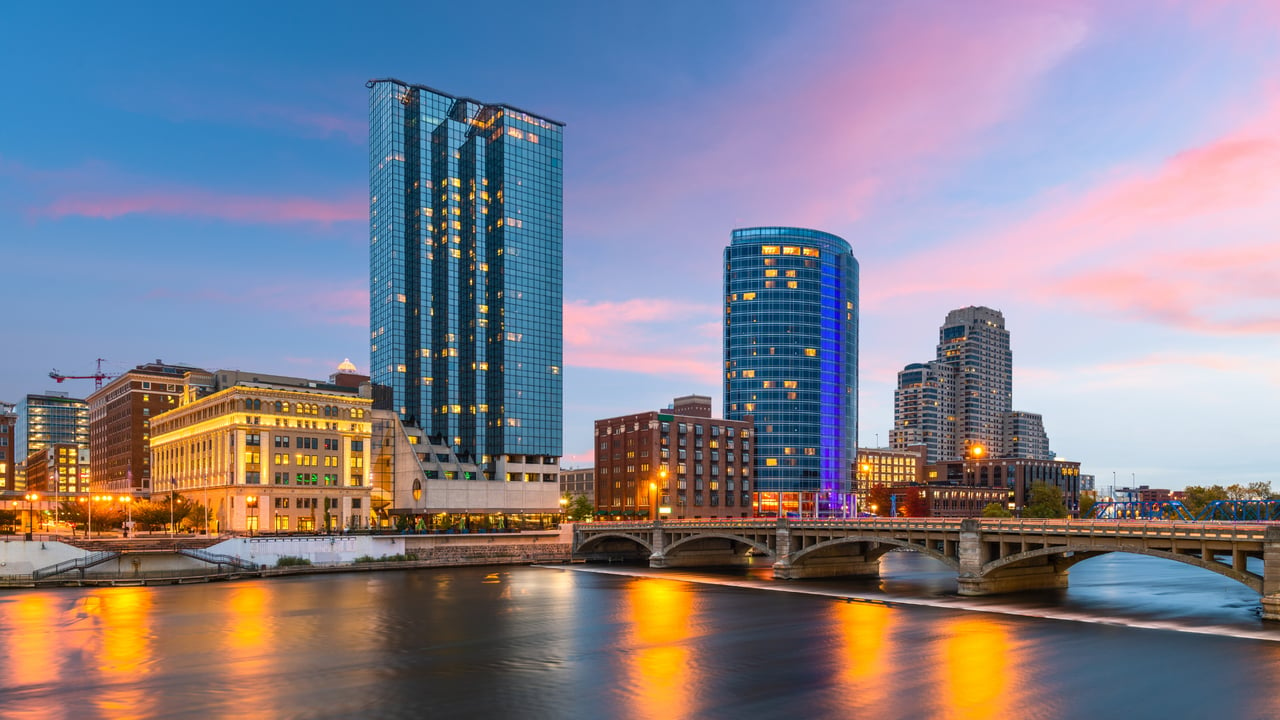
If you've driven through downtown Grand Rapids recently, you've probably noticed more cranes, construction fencing, and redevelopment projects than ever before.
From a reimagined riverfront to new entertainment venues and mixed-use developments, 2026 is proving to be one of the most transformative years in the city's history. These projects aren't just changing the skyline—they're influencing where people choose to live, work, and invest.
Whether you're a homeowner, prospective buyer, or simply interested in the future of West Michigan, here are some of the biggest developments to watch.
1. A New Era for the Grand River
For decades, the Grand River served primarily as a backdrop to downtown. Today, it's becoming the centerpiece.
Multiple public and private investments are focused on reconnecting residents with the waterfront through restored river rapids, expanded public access, trails, parks, and new mixed-use development. The long-term vision is to transform the river into one of Grand Rapids' defining destinations for recreation, dining, and community events.
For nearby neighborhoods, improved riverfront access could continue to increase demand while creating new opportunities for housing, retail, and entertainment.
2. Fulton & Market Riverfront Development
One of the largest private investments in Grand Rapids history is taking shape along the downtown riverfront.
The Fulton & Market project is expected to include luxury residential towers, office space, restaurants, retail, public gathering areas, and a boutique hotel. Once completed, the development will significantly reshape the city's skyline while bringing thousands of residents, visitors, and employees to the riverfront.
Projects of this scale typically create a ripple effect by encouraging additional investment in nearby neighborhoods and supporting long-term economic growth.
3. Entertainment Is Getting a Major Upgrade
Grand Rapids is quickly becoming one of the Midwest's premier entertainment destinations.
Acrisure Amphitheater
The new 12,000-seat Acrisure Amphitheater is expected to attract nationally recognized concerts, festivals, and community events. Located along the Grand River, the venue is designed to become a year-round destination while supporting nearby restaurants, hotels, and local businesses.
Amway Stadium
Construction also continues on the future home of AC Grand Rapids. The new soccer-specific stadium will host professional matches, youth sporting events, and community programming while further activating the city's northwest riverfront district.
Together, these venues represent hundreds of millions of dollars in investment and position Grand Rapids as a regional destination for sports and entertainment.
4. More Than New Buildings—New Neighborhoods
Today's developments aren't focused solely on office towers.
Many projects combine residential housing, retail space, restaurants, hotels, offices, and public gathering areas into walkable mixed-use communities.
This type of development helps create neighborhoods where residents can live, work, shop, and socialize without relying heavily on a vehicle—a trend that's becoming increasingly popular among both young professionals and retirees.
As these districts mature, surrounding areas often experience renewed investment and increased housing demand.
5. Continued Investment in Public Spaces
Growth isn't limited to downtown.
Communities throughout Kent County continue investing in parks, trails, and waterfront improvements designed to improve quality of life and encourage outdoor recreation.
Projects such as East Grand Rapids' Waterfront Park improvements highlight a broader regional focus on expanding green space, restoring natural habitats, improving accessibility, and creating gathering places for residents and visitors alike.
These types of investments often enhance neighborhood appeal while supporting long-term property values.
6. What This Means for the Housing Market
Major developments rarely impact only commercial real estate.
As Grand Rapids continues attracting employers, visitors, and new residents, demand for housing is expected to remain strong in many parts of West Michigan.
While additional residential construction will help increase inventory over time, highly desirable neighborhoods near downtown, the riverfront, and major entertainment districts may continue experiencing strong buyer interest.
For homeowners, these investments can contribute to long-term neighborhood growth.
For buyers, understanding where development is occurring today may help identify areas with future appreciation potential.
Looking Ahead
Grand Rapids has always been a city known for innovation, entrepreneurship, and community investment. The projects underway in 2026 reflect a shared vision of creating a more connected, vibrant, and livable city for future generations.
From waterfront revitalization and world-class entertainment venues to mixed-use neighborhoods and public space improvements, the transformation happening today will influence West Michigan for decades to come.
Whether you're considering buying, selling, investing, or simply following the growth of our region, now is an exciting time to watch Grand Rapids evolve.
Final Thoughts
Development doesn't just change buildings—it changes how people experience a city.
As these projects move from construction to completion, Grand Rapids is positioning itself as one of the Midwest's most dynamic places to live, work, and explore. For homeowners and buyers alike, staying informed about these changes can provide valuable insight into where the market—and the community—is headed next.