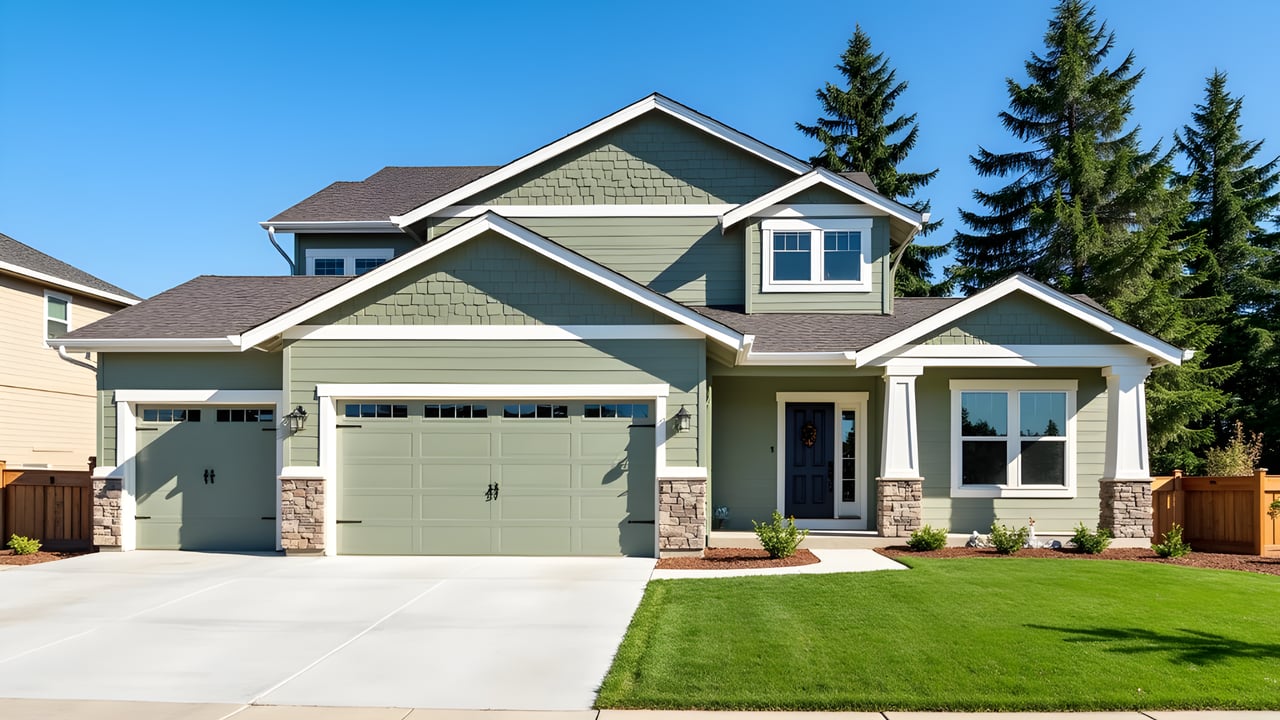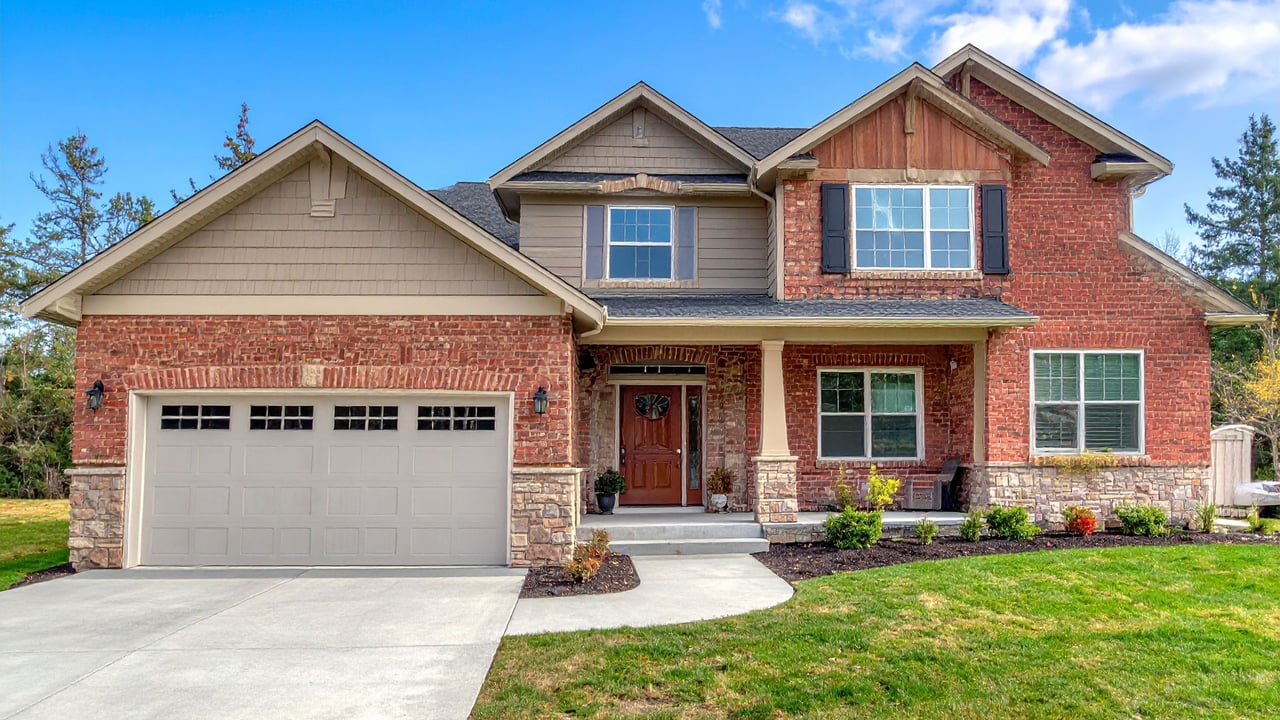
Two homes can sit on the same street, have nearly identical square footage, and offer the same number of bedrooms and bathrooms—yet sell for very different prices.
That's because home value isn't determined by one feature or calculation. Buyers consider the entire property and how it compares with the other options available to them. Location, condition, recent sales, layout, upgrades, mortgage rates, inventory, and even the home's first impression can influence what someone is willing to pay.
This is also why an online estimate doesn't always tell the full story. An automated valuation may recognize that your home has three bedrooms and 1,800 square feet, for example, but it may have difficulty accounting for a recently replaced roof, an awkward floor plan, deferred maintenance, or differences between one street and another.
Whether you're preparing to sell, considering renovations, or simply wondering how much equity you've built, understanding what actually affects your home's value can help you make better decisions about your property.
Location
There's a reason "location, location, location" has become one of real estate's best-known phrases. Buyers aren't only purchasing a house; they're also purchasing access to everything surrounding it.
Proximity to employment, shopping, restaurants, parks, transportation, schools, and other amenities can affect demand for a particular area. Future development can matter as well. New businesses, improved infrastructure, or additional recreational opportunities may make an area more desirable over time.
Location differences can even exist within the same neighborhood. Two nearly identical houses may attract different levels of interest if one sits on a quiet residential street while the other is located along a heavily traveled road.
Unlike flooring, paint, or landscaping, location isn't something a homeowner can renovate. That makes it one of the most important factors to consider when comparing properties and estimating value.
Recent Comparable Home Sales
One of the strongest indicators of what your home may be worth is what buyers have recently paid for similar properties nearby. These properties are commonly known as comparable sales, or "comps."
Useful comparable properties typically share characteristics with your home, such as location, finished square footage, number of bedrooms and bathrooms, age, lot size, condition, architectural style, garage capacity, and major features.
Suppose three similar homes in your neighborhood recently sold for $390,000, $400,000, and $410,000. If your home is comparable in size, condition, and features, those sales provide useful evidence of the price range current buyers have been willing to accept.
This is also why a nearby home's sale price can tell you more than its original asking price. A seller can list a home at almost any price. A closed transaction shows what a buyer was actually willing to pay and what a seller was willing to accept under those market conditions.
Size and Layout
Square footage matters, but more space doesn't automatically mean more value.
Buyers also consider how effectively that space can be used. The number of bedrooms and bathrooms, storage, garage capacity, finished basement space, and overall flow of the home can all influence its appeal.
Consider two homes that are both approximately 2,000 square feet. One has a practical layout with three well-sized bedrooms, useful storage, a functional kitchen, and flexible living space. The other has the same square footage but includes narrow rooms, limited storage, and a floor plan that makes everyday living more difficult. Buyers may respond very differently to the two properties despite their similar size.
Buyer preferences can also change over time. Features such as home offices, flexible rooms, usable basements, larger kitchens, and connected living areas may influence how buyers perceive a property's functionality.
Condition and Maintenance
A home doesn't necessarily need to be completely renovated to command a strong price. It does, however, need to give buyers confidence that it has been properly maintained.
Major components such as the roof, HVAC system, plumbing, electrical system, windows, foundation, and exterior condition can affect that confidence. Buyers also notice smaller signs of maintenance, including damaged flooring, peeling paint, water stains, broken fixtures, or unfinished repairs.
For example, an older kitchen that is clean and well maintained may create less concern than a recently updated property with signs of water damage, neglected mechanical systems, or several incomplete projects.
The effect can go beyond the actual cost of the repairs. When buyers notice multiple maintenance issues during a showing, they may start wondering what problems they haven't discovered yet. That uncertainty can influence both their willingness to make an offer and the amount they're comfortable paying.
Renovations and Improvements
Renovations can improve a home's appeal and potentially increase its value, but renovation cost and added market value are not the same thing.
A homeowner who spends $50,000 remodeling a kitchen shouldn't automatically assume the property is now worth $50,000 more. The actual impact depends on the quality of the project, the local market, surrounding properties, and how much buyers value the improvement.
Broadly appealing improvements can sometimes be more useful when preparing to sell. Fresh paint, updated flooring, landscaping, improved lighting, necessary repairs, updated mechanical systems, and refreshed kitchens or bathrooms can improve the overall impression of a property.
Highly personalized projects can be more difficult to value. A $75,000 renovation designed around one homeowner's specific taste may be worth far less to the next buyer. Likewise, installing extremely expensive finishes in an area where comparable homes don't offer them may make it difficult to recover the full cost.
If you're renovating specifically to prepare for a sale, it's worth discussing potential improvements with a real estate professional before committing to a large project. Sometimes correcting smaller problems and improving presentation can have a greater impact than an expensive renovation buyers didn't ask for.
Current Housing Market Conditions
Your home doesn't have a fixed value that exists independently of the market. What buyers are willing to pay is influenced by the conditions at the time you sell.
When relatively few homes are available and many buyers are competing, sellers may experience faster sales, stronger offers, and more negotiating power. When buyers have more inventory to choose from, homes may take longer to sell and sellers may face greater competition.
This means the same house could reasonably have a different market value at two different points in time without the homeowner making any changes to the property.
A valuation from several years ago, or even one from a significantly different market, shouldn't automatically be treated as the home's value today. Current sales and current competition provide a much better picture of what is happening now.
Supply and Buyer Demand
Closely connected to market conditions is the basic relationship between supply and demand.
Imagine that 100 buyers are actively searching in a neighborhood where only 10 suitable homes are available. Those buyers have limited options. A desirable new listing may attract significant attention because there aren't many alternatives.
Now imagine the opposite situation. There are 100 similar properties available but only 20 serious buyers. Buyers can afford to be more selective, and sellers have to compete more aggressively on price, condition, features, and presentation.
This is why it's important to evaluate inventory at a local level. A city may appear to have plenty of homes for sale overall while your particular neighborhood, property type, or price range remains highly competitive. The conditions affecting your home are often more specific than broader housing-market headlines suggest.
Mortgage Rates and Buyer Affordability
Mortgage rates don't change your home's kitchen, location, or square footage, but they can change what buyers can comfortably afford.
Consider a buyer with a specific monthly housing budget. When mortgage rates are lower, that budget may support a larger loan. If rates increase, the same buyer may need to lower the maximum purchase price they're considering to keep the monthly payment manageable.
When this happens across thousands of buyers, changes in purchasing power can influence demand throughout the housing market.
Higher rates don't automatically mean home values will decline. Low inventory, strong local demand, and other factors may continue supporting prices. However, financing costs are an important part of the overall picture because affordability influences how many buyers can realistically compete for a property.
Curb Appeal and Buyer Perception
Not every factor affecting a sale can be measured neatly on a spreadsheet. How buyers feel about a home matters too.
Before a buyer sees the kitchen or walks through the bedrooms, they've already seen the front of the property. Landscaping, exterior paint, the driveway, front door, porch, lighting, and general cleanliness begin shaping their impression before the showing really starts.
The same principle applies inside. A clean and thoughtfully presented property can make it easier for buyers to appreciate its features. Visible neglect can shift their attention toward repairs and future expenses.
Curb appeal alone won't transform the underlying market value of a home, but strong presentation can affect how buyers perceive the property and how excited they are to compete for it.
What Doesn't Automatically Increase Your Home's Value?
One of the biggest mistakes homeowners can make is assuming that every dollar spent on a property will eventually come back through a higher sale price.
Highly customized renovations, luxury finishes that are uncommon for the neighborhood, poorly completed DIY projects, and improvements that local buyers don't prioritize may provide a limited financial return. Overbuilding can create a similar problem. If your home becomes substantially more expensive than surrounding properties, nearby comparable sales may make it difficult for the market to support the price you expect.
That doesn't mean every home improvement needs to generate a financial return. If you're planning to live in the property for another decade, an improvement that makes your home more enjoyable may be worthwhile regardless of resale value.
The calculation changes when you're renovating specifically to sell. In that case, the question shouldn't simply be, "Will this make my house nicer?" It should also be, "Will buyers in my market value this improvement enough to justify the cost?"
How Do You Determine What Your Home Is Worth?
Estimating a home's current value requires looking at the entire picture rather than relying on one number.
Recent comparable sales provide evidence of what buyers have paid. Current listings show what your home will be competing against. From there, differences in location, size, layout, condition, improvements, inventory, buyer demand, and market conditions can help explain why your property may be worth more or less than another home nearby.
Online home-value estimates can be a convenient starting point, but they don't always capture the details that make individual properties different. An automated estimate may not fully understand the condition of your roof, the quality of a renovation, the functionality of your layout, or how your specific location compares with another street nearby.
A detailed comparative market analysis can provide additional context by examining recent local transactions and comparing those properties directly with your home.
Ultimately, a home's market value isn't simply what an owner hopes to receive or what an online tool estimates. It comes down to what qualified buyers are willing to pay under current market conditions.
Final Thoughts
Your home's value is the result of several factors working together. Some are within your control. You can maintain the property, complete necessary repairs, improve its presentation, and make strategic updates. Others—such as location, mortgage rates, housing inventory, and overall buyer demand—are largely outside your control.
Understanding that difference is especially important when you're deciding whether to renovate or prepare your home for sale. Spending money in the wrong areas doesn't guarantee a higher selling price, while smaller improvements that address buyer concerns may have a meaningful impact on how the property is received.
If you're curious about what your home could sell for, start with what's happening in your local market. Look at recent comparable sales, current competition, your home's condition, and the features that distinguish it from other properties.
Knowing what your home is worth doesn't mean you need to sell. It simply gives you better information for deciding what to improve, how much equity you may have, and what your options could look like when you're ready to make your next move.